A gluten-free diet is easy to describe but difficult to stick to in a country where bread is served with every meal. Here’s what really matters, and what’s just a fad.
First of all, what are we talking about?
Coeliac disease is an autoimmune disease affecting around 1 % of the population. Gluten triggers the destruction of the intestinal villi. A strict, lifelong gluten-free diet is required. Diagnosis is made through serological testing followed by a biopsy — before Gluten must be removed, otherwise the test results will be unreliable.
Wheat allergy is an immediate, distinct and rarer reaction.
Non-coeliac gluten sensitivity exists but remains poorly defined. Some of the symptoms attributed to gluten actually stem from FODMAPs, fermentable carbohydrates found in wheat. This explains why some people can tolerate long-fermented sourdough bread, which is low in FODMAPs, but not industrially produced bread.
If you do not fall into any of these categories, there is no proven benefit to cutting out gluten. In fact, it is often counterproductive: commercially produced gluten-free products are frequently higher in fat, higher in sugar and lower in fibre than their conventional equivalents.
Pitfalls specific to Moroccan cuisine
Bread, msemen, harcha made from wheat semolina and pasta are obvious choices. The pitfalls lie elsewhere:
- Couscous It is made from durum wheat semolina. Maize or rice couscous does exist, but this is not the standard product.
- Chorba and harira are very often made with flour or contain vermicelli.
- Spice blends sold in bulk can be mixed with flour.
- Classic soya sauce Contains wheat — unless otherwise stated (e.g. ‘tamari’).
- Briouates and filo pastry sheets are made from wheat flour.
Naturally gluten-free products
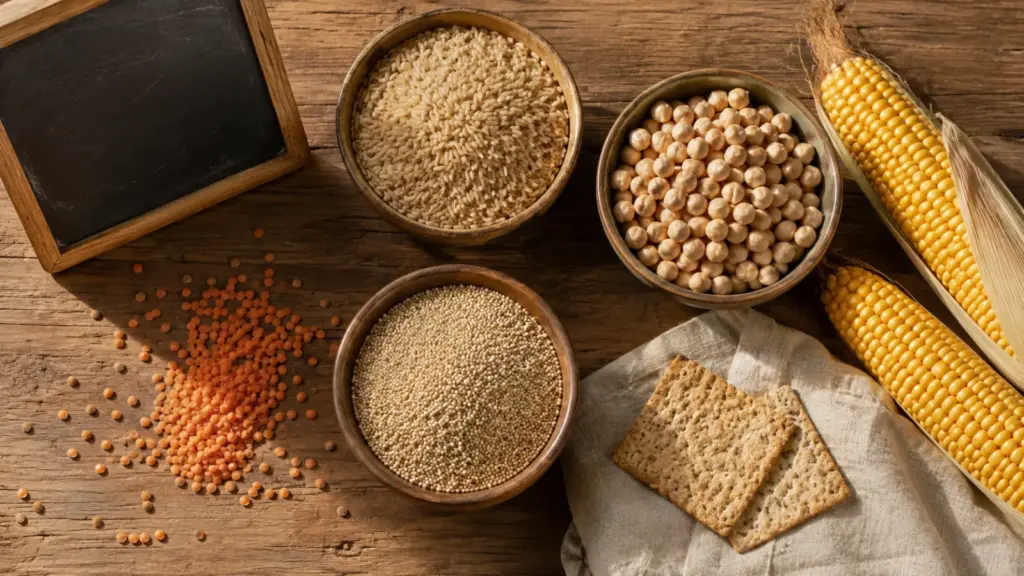
Rice, maize, buckwheat, quinoa, millet, chickpeas, lentils, all unbreaded meat and fish, all fruit and vegetables, eggs, plain dairy products, olive oil.
In other words: the essentials of an unprocessed diet. Going gluten-free can be tricky, especially when trying to replicate bakery products.
Where specialist products really make a difference
It is with bread, biscuits and snacks that it is difficult to make substitutions yourself. The range Schär Suitable for use in: biscuits, crackers, chocolate snacks such as Milk Chocolate Snack.
Please note: these products are intended as a temporary solution; they are not a staple part of your diet. Check the labels as you would for any processed food.
Cross-contamination
This is an underestimated issue. For someone with coeliac disease, even a few crumbs are enough to keep inflammation going.
- A shared toaster is a major source of contamination. Provide a dedicated toaster, or use baking bags.
- Using the same cooking water for both standard and gluten-free pasta negates the benefit.
- Butter and spreads into which a knife that has touched bread is dipped again.
- Shared frying oils, both in restaurants and at home.
Beware of nutritional deficiencies
A poorly planned gluten-free diet often lacks fibre, iron, B vitamins and magnesium — all of which are found in significant quantities in whole grains.
Balance your diet with pulses, nuts, alternative wholegrains and, if necessary, fibre such as organic psyllium, also helpful for digestion.
And what about digestion in general?
If your symptoms persist despite a strict gluten-free diet, gluten may not be the only factor. Medical advice is better than self-imposed restrictions that become more extensive month by month. Some digestive enzymes may help with certain discomforts, but are not a substitute for a diagnosis.
View the whole category dietary requirements.