Sweating causes you to lose water and electrolytes, particularly sodium. Does that mean every bottle needs a tablet or a powder? It depends on the session, the heat and your losses. Here is how to choose a hydration option without confusing it with an energy supply.
When electrolytes may be useful
A short session in moderate conditions does not automatically justify a supplement. During prolonged exercise, hot conditions or heavy sweating, a targeted intake may be relevant. Duration alone does not determine the same dose for everyone.
The Australian Institute of Sport advises considering individual losses, drinks and food together. For a long race, a sports dietitian can help you develop an appropriate plan.
Tablets or powder?
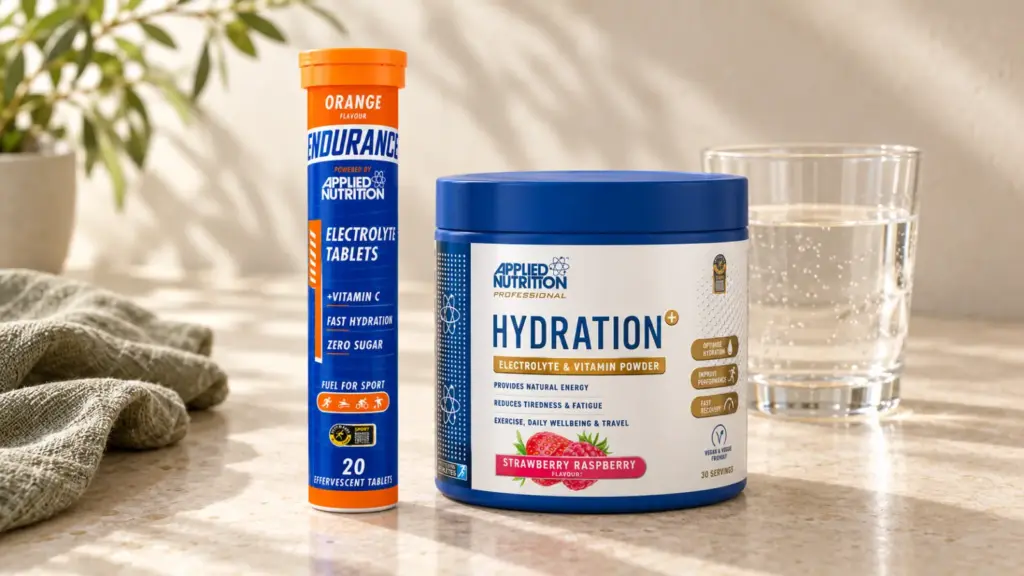
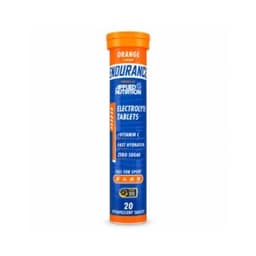
Effervescent tablets are easy to carry and count. See the Applied Nutrition Endurance Electrolytes Orange, 20 tablets page for that specific product. Tablet counts alone cannot compare two products without their composition and dilution instructions.
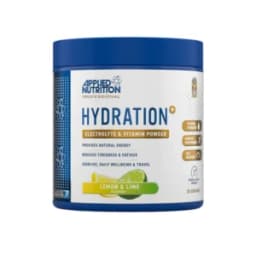
Powder should be measured according to the serving on the tub, ideally using scales. The Hydration+ Lemon & Lime page presents this format. A powder is not an invitation to increase its concentration freely.
Compare sodium per serving, the recommended water volume, other minerals, carbohydrates and ingredients. The format alone does not determine whether a product is for sport or everyday use. To calculate a concentration, divide the serving’s sodium in milligrams by the prepared volume in litres.
Serving sizes and limits
Follow the directions for the actual flavour and pack you have. Formulations and instructions can change. Do not transfer instructions from an older tube, another flavour or a tablet to a powder.
The manufacturer’s current pages for Endurance tablets and Hydration+ powder give separate directions. If they differ from your packaging, confirm the instructions for your batch before changing your preparation. Do not combine several products without checking their total contribution.
Electrolytes or an energy gel?
They address different needs: electrolytes supply minerals, while a gel or carbohydrate drink is intended to provide carbohydrates. A drink with plenty of minerals but little carbohydrate does not automatically replace your fuelling plan.
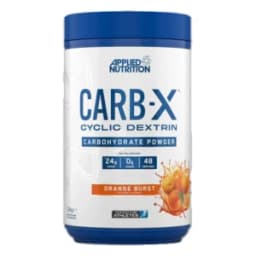
For longer outings, compare energy gels, the CarbX Orange Burst product page and our energy gel or carbohydrate drink guide. This is not a recommendation to take everything together: choose an approach whose total intake you understand.
A few practical habits
- Test your preparation in training before using it in competition.
- Plan access to water and aid stations, along with the capacity of your bottles.
- Follow the product’s storage instructions and its time limit for consumption after mixing.
- Do not try to drink as much as possible: excess fluid can be dangerous, even when it contains electrolytes.
Precautions
If you follow a salt-restricted diet, have kidney or heart disease, take medication, are pregnant or are breastfeeding, seek advice before adding a supplement. Respect the exact product’s age restrictions. A sports drink does not replace medical care for illness or dehydration.
What to remember
Choose according to your exercise, sweating, product label and access to supplies. Tablets and powder are two practical formats; neither is automatically superior. Check the products and their availability in our sports hydration selection.
Manufacturer and Australian Institute of Sport sources checked on 11 October 2026. Verify the instructions for the product and batch you use before preparation.