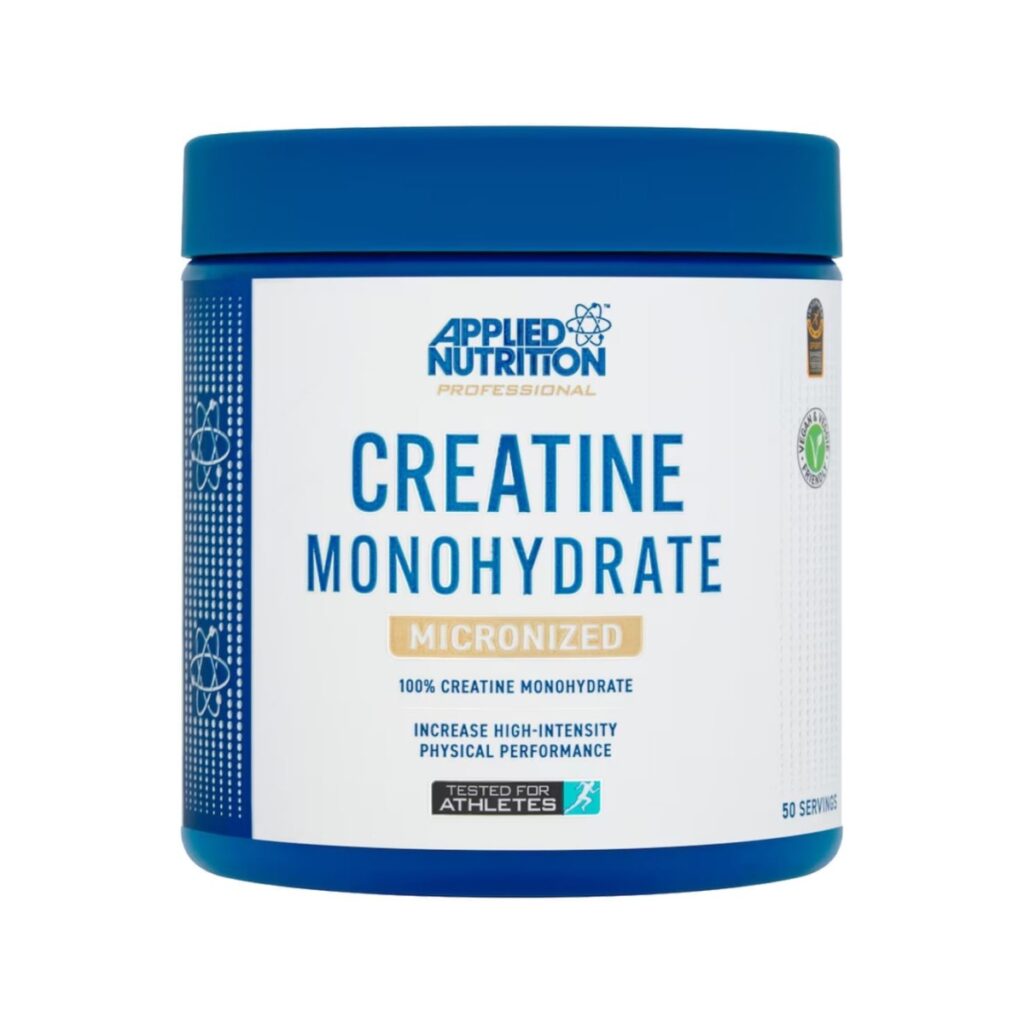
Does creatine cause hair loss? The available evidence does not establish that it does. A trial published in 2025 found no difference between creatine and placebo in the hair measurements it tracked. That deserves a more precise explanation than either “yes” or “there is no risk”.
Where does the question about DHT come from?
In 2009, a small study involving 20 rugby players measured hormones after three weeks of supplementation, including a loading phase. It found an increase in dihydrotestosterone, or DHT. It did not measure hair loss. Moving from a hormonal change to the conclusion that “creatine causes baldness” therefore goes beyond what the trial investigated. Study by van der Merwe and colleagues, 2009.
What the 2025 trial actually examined
The double-blind randomised trial by Lak and colleagues recruited 45 resistance-trained men aged 18 to 40; 38 completed it. For twelve weeks, they received either 5 g of creatine monohydrate per day or a placebo. The researchers measured hormones and several hair parameters, including density and cumulative thickness. They detected no significant difference between the groups in changes in DHT or these hair measurements. Full trial, published in 2025 in the Journal of the International Society of Sports Nutrition.
The limitations matter: a small sample, men only, twelve weeks of follow-up and no recorded family history of hair loss. The results are reassuring within that setting; they do not establish what happens at every dose, in every person or over several years.
Hair loss starting after a purchase does not identify its cause
Events occurring in sequence do not prove causation. When starting a supplement, people may also change their diet, training or other habits. The American Academy of Dermatology describes many possible causes of hair loss, including hereditary causes, certain illnesses, medicines and episodes of stress. Some appear after a delay. The causes of hair loss described by the AAD.
If you notice new or persistent hair loss, especially patches or scalp discomfort, have it assessed by a doctor or dermatologist. Note when it began, the products you use and recent changes to prepare for the conversation. Diagnosis depends on that history and an examination, sometimes supported by tests; a commercial article cannot replace it. How dermatologists investigate the cause of hair loss.
What this means when choosing creatine
It does not justify paying more for a formula marketed as “hair-friendly”. To compare products, check the exact form, ingredients, tub weight and price for an equal amount. Also distinguish creatine alone from a blend of several ingredients: the trial above cannot assess every product with the word creatine on its label.
Our guide to buying creatine in Morocco explains how to compare sizes. The article on creatine monohydrate: evidence and use separately covers the uses studied and precautions. Prices and availability are listed in the creatine range.
Three common questions
Does an increase in DHT prove hair loss?
No. They are different outcomes. Hair itself needs to be examined and results compared under appropriate conditions, rather than turning an isolated hormone measurement into a diagnosis.
Is switching brands a solution to hair loss?
Switching brands does not replace investigating the cause. Take an exact list of your supplements and medicines to your healthcare professional rather than trying more and more products.
Should you start an “anti-hair-loss” supplement at the same time?
There is no reason to automatically add a second product to compensate for a presumed effect. First establish what is happening and whether there are any particular needs.
Sources consulted on 18 October 2026. General information, without a diagnosis or personalised treatment advice.