Creatine is the most widely studied sports supplement in the world — with several hundred controlled trials conducted since the 1990s. It is also the one surrounded by the most misconceptions. Let’s set the record straight.
What is it used for?
Your muscles store phosphocreatine, which is used to regenerate ATP during very short, high-intensity bursts of exercise: a set of squats, a sprint or a burst of speed. Taking creatine supplements increases these reserves by approximately 20 to 40 %.
In practical terms, this means one or two extra repetitions per set. Over several months, this additional training volume results in a measurable increase in strength and muscle mass.
The effect is neither spectacular nor immediate. It is simply real and reproducible, which is rare in this sector.
Dosage
3 5 gs per day, every day. That’s all.
The loading phase — 20 g per day for 5 to 7 days — replenishes reserves more quickly, in one week rather than three to four. It offers no benefits beyond this time saving, and is more likely to cause digestive discomfort. If you’re not in a hurry, skip it.
It does not matter when you take them. Creatine works by gradually building up reserves, not by causing a sudden spike. Take it whenever you remember, so you don’t forget.
Rest days matter. It is consistency that maintains blood levels, not proximity to training.
Monohydrate or ‘advanced’ forms
The monohydrate form is the one tested in the vast majority of studies. The more expensive forms — hydrochloride, malate and ethyl ester — promise better absorption without having demonstrated any superior results.
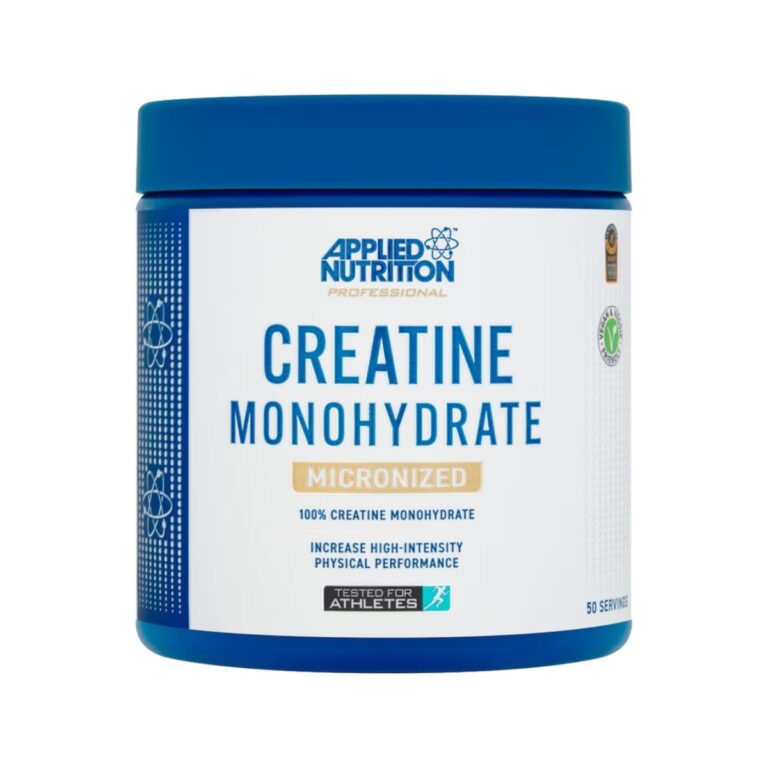
There is no justification for paying more for a product with less information available. The Applied Nutrition monohydrate or that of Dorian Yates do the job.
The three common concerns
‘It makes you put on weight’
Yes, 1 at 2 kg during the first few weeks. It’s not fat: creatine attracts water in the muscle cell. The muscle is fuller, not fattier. This intracellular water has nothing to do with subcutaneous water retention, which causes a bloated appearance.
‘It damages the kidneys’
In subjects with healthy kidneys, no study has shown any evidence of kidney damage, even in follow-up studies lasting several years. The confusion stems from a marker: creatine increases blood creatinine levels, which are used precisely to assess kidney function. The marker rises, but kidney function remains unchanged.
Please inform your healthcare professional of any supplements you are taking before having a blood test, to avoid a false positive.
If you have a known kidney condition, the situation is different: seek advice from your doctor.
‘You need to do detox programmes’
No. No mechanism for developing a dependence has been reported. Stopping simply allows the body’s reserves to be depleted over four to six weeks.
What goes well with it
Creatine enhances strength performance. It is not a substitute for protein intake or training.
- For protein, see our guide whey, isolate or casein and the range sports nutrition.
- For those who want everything in one go, the Muscle & Performance Pack Includes protein isolate, creatine and a shaker.
- For energy during training, see our article on pre-workout supplements.
Who should avoid this
People with kidney failure, pregnant or breastfeeding women (due to a lack of sufficient data), and children under 18 years of age, for the same reason. If in doubt, medical advice is more reliable than an article.