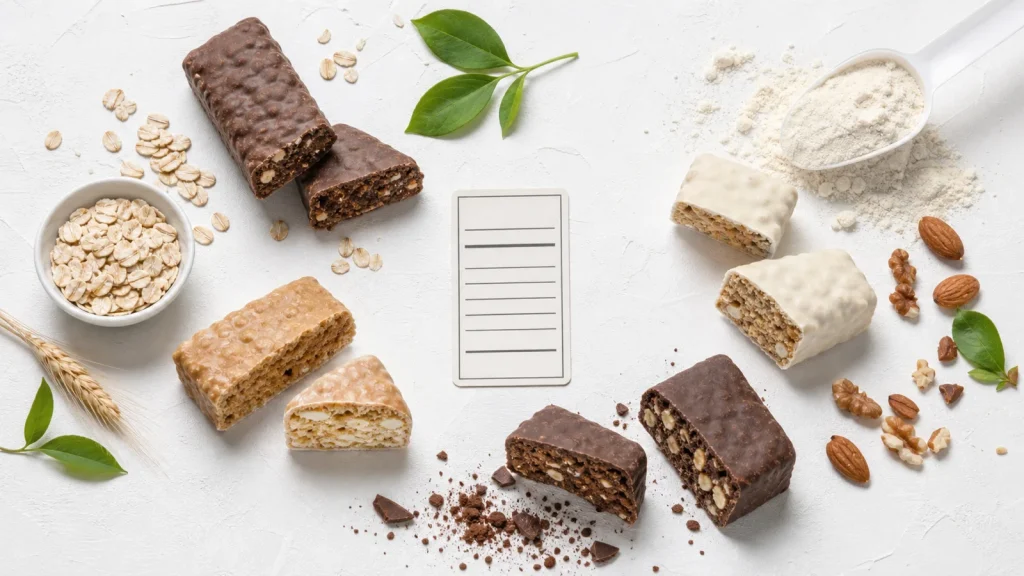
A bar may be convenient without necessarily being ‘healthy’. Some are like a small, protein-rich meal; others are like a fortified sweet treat. The choice also depends on the context: a snack, post-workout recovery, a hike or simply a craving for something sweet.
A five-step guide
- Actual portion size: Check that the figures match the whole bar.
- Proteins: 15 25 g provides a genuinely protein-rich snack for many active adults; a lower figure may still be suitable if the bar is small.
- Fibre: They help you feel full, but a high dose of added fibre or polyols may cause bloating.
- Added sugars: Compare products of the same size. ‘No added sugar’ does not mean no calories.
- Calories: 300 kcal’s energy bar isn’t bad; it’s simply more like a mini-meal than a light snack.
The protein-to-calorie ratio test
Without striving for mathematical perfection, ask yourself what the bar offers in terms of energy. A bar containing 200 kcal and 20 g of protein serves a different purpose to a bar containing 280 kcal and 8 g. The latter may be tasty, but does not necessarily deserve its ‘protein’ label.
List of ingredients: shorter isn’t always better
A short list is easy to understand, but quality isn’t just about the number of lines. Pay particular attention to the protein source, fats, syrups, added fibre and allergens. Taste and tolerability matter, because a bar that looks excellent on paper but is hard to digest is of no use.
When a proper snack makes a difference
Yoghurt and fruit, eggs and wholemeal bread, or a handful of nuts and fruit often provide more volume and micronutrients. Energy bars are better for portability and shelf life. Use them where this advantage is a real benefit.
Catalogue transparency: No protein bars were in stock in the shop at the time of publication of this guide. We therefore do not include any invalid product links. See the section Healthy snacks for available alternatives.