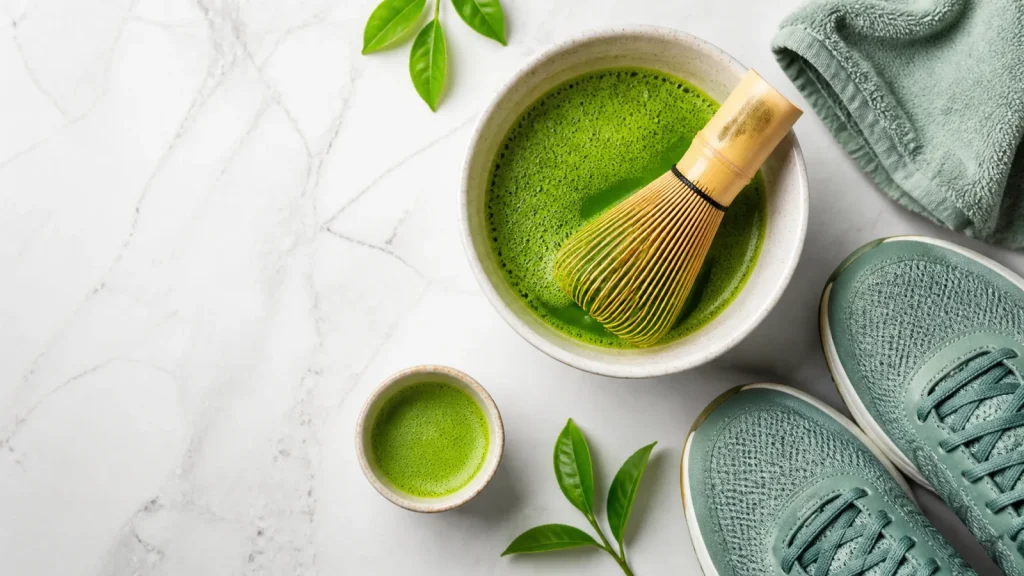
Matcha is a powdered green tea: the whole leaf is consumed in suspension. It contains caffeine and polyphenols, particularly catechins. However, its reputation as a ‘detox’ goes beyond the evidence.
When it comes to performance, caffeine remains the most convincing explanation
Caffeine can reduce the perception of exertion and improve certain performance metrics. The amount of caffeine in a cup of matcha varies depending on the powder and how it is prepared; do not assume that a cup is always low in caffeine. Count it towards your daily total, especially if you already drink coffee or take a pre-workout supplement.
Antioxidants: do not confuse markers with performance
A systematic review concluded that regular green tea supplementation may increase antioxidant status and reduce certain markers of exercise-related oxidative stress, unlike a single dose. This does not prove a guaranteed improvement in speed, strength or fat loss.
Matcha and weight loss
A meta-analysis published in *2026* on green tea extract suggests an increase in fat oxidation in certain contexts, with varying degrees of certainty. An increase in fat oxidation over a few hours does not equate to visible fat loss if energy intake remains unchanged.
A simple preparation
Sift a small amount of PerfectTed Summer Berry Matcha, add a little lukewarm water, whisk, then top up with water or milk. Avoid taking it late in the day if caffeine disturbs your sleep.
Exercise caution with concentrated extracts
A traditional drink and a high-dose extract are not the same thing. If you are pregnant, have liver disease, anaemia, are taking medication or are highly sensitive to caffeine, you should seek professional advice.