Article updated on 6 September 2026.
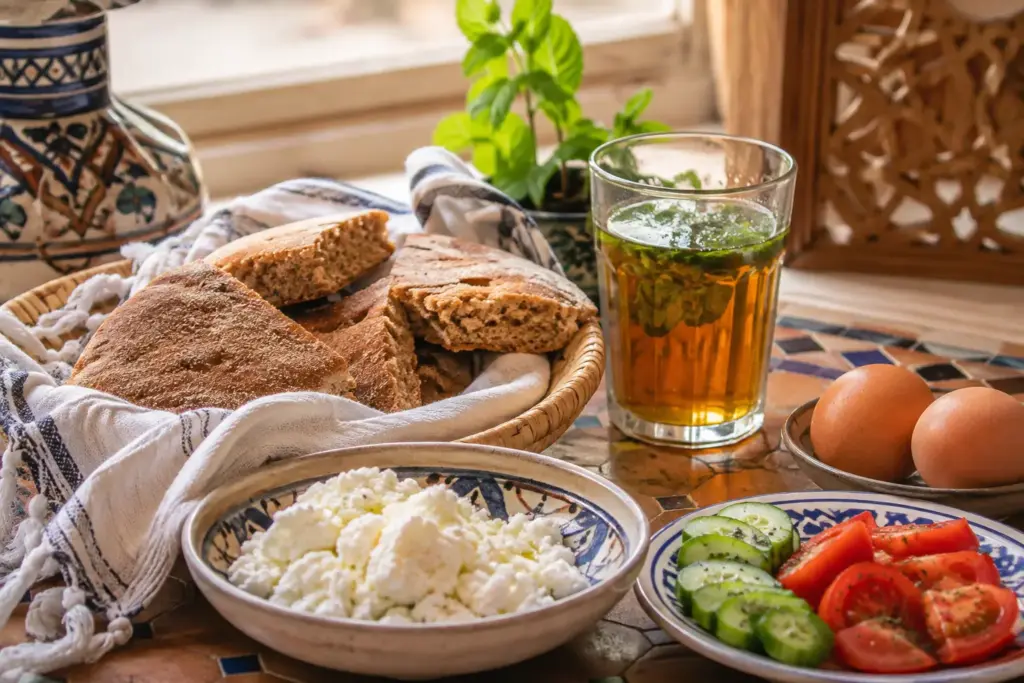
Bread and tea can still form part of a protein-rich breakfast. Simply build the meal around a specific source of protein: eggs, dairy, pulses or fish, depending on your preferences. Here are seven individual meal plans, with precise portion sizes to make the estimates clear.
These quantities are examples for adults, to adjust to hunger, activity and later meals. Each egg is counted as approximately 50 g of edible weight. Tea, mint, water and small pinches of spices are not included; any added sugar, honey, butter or oil must be counted separately. Preparation times are estimates and have not been timed in a kitchen.
1. Bread, cumin-flavoured eggs and mint tea
For one person: 100 g of egg, edible weight (approximately 50 g per egg); 80 g of wholemeal bread, generic value; 150 g of raw tomato; 200 ml of semi-skimmed milk, approximate value of 1.5 per cent.
Cook the two eggs to your liking until the whites and yolks are set, without adding any fat. Serve with bread and tomato. The milk can be drunk separately. Prepare unsweetened mint tea to ensure the nutritional values stated are maintained.
Estimated time: At home; approximately 12 minutes.
Estimated nutritional values: Approximately 464 kcal and 30.5 g of protein per serving.
2. Chickpea and yoghurt open sandwiches
For one person: 100 g of cooked and drained chickpeas; 70 g of wholemeal bread (generic value); 200 g of plain full-fat yoghurt; 100 g of raw tomato; 5 g of olive oil.
Mash the chickpeas with a little water, cumin and oil. Spread on the bread, add the tomato and serve the yoghurt on the side. Use pre-cooked and drained chickpeas; cooking time is not included.
Estimated time: No cooking required; approximately 5 minutes.
Estimated nutritional values: Approximately 525 kcal and 25.4 g of protein per portion.
3. Bowl of oats, banana and egg on the side
For one person: 50 g of dry oat flakes; 250 ml of semi-skimmed milk, approximately 1.5 per cent fat; 100 g of peeled banana; 50 g of egg, edible weight (approximately 50 g per egg).
Heat the oats with the milk, then add the sliced banana. Serve with a hard-boiled egg. For the office, use a pre-cooked egg and keep the whole thing chilled whilst travelling.
Estimated time: To take away; takes about 10 minutes, assuming the egg is already cooked.
Estimated nutritional values: Approximately 465 kcal and 22.3 g of protein per serving.
4. Bread and sardines: a savoury breakfast option
For one person: 80 g of tinned sardines in oil, drained; 80 g of wholemeal bread (generic value); 150 g of raw tomato; 125 g of plain full-fat yoghurt.
Drain the sardines, mash them lightly and spread them over the bread. Add chopped tomatoes and some cumin. Yoghurt rounds off the dish. Choose a tinned product to suit the family’s tastes and vary the sources of protein throughout the week.
Estimated time: No cooking required; approximately 5 minutes.
Estimated nutritional values: Approximately 471 kcal and 35.3 g of protein per serving.
5. Scrambled eggs and a small bowl of lentils
For one person: 100 g of egg, edible weight (approximately 50 g per egg); 120 g of cooked and drained lentils; 50 g of wholemeal bread, generic value; 100 g of raw tomato; 5 g of olive oil.
Reheat the pre-cooked lentils with the tomato and a little water. Scramble the eggs in a frying pan with the oil until cooked through. Serve with bread. Start with a smaller portion of lentils if you don’t eat them very often.
Estimated time: A hearty breakfast; approximately 10 minutes.
Estimated nutritional values: Approximately 470 kcal and 30.5 g of protein per portion.
6. Banana and peanut butter on toast with a large dairy product
For one person: 70 g of wholemeal bread, generic value; 20 g of unsalted peanut butter; 100 g of peeled banana; 250 g of plain full-fat yoghurt.
Spread the peanut butter onto the bread, then add the banana, sliced into thin rounds. Serve the plain yoghurt on the side. Choose a peanut butter made from peanuts, with no added sugar, to keep as close as possible to the calculated values.
Estimated time: No cooking required; approximately 5 minutes.
Estimated nutritional values: Approximately 538 kcal and 22.9 g of protein per portion.
7. Thick yoghurt, oats and strawberries, with a small slice of toast
For one person: 200 g of non-fat plain Greek yoghurt; 30 g of dry oat flakes; 120 g of strawberries; 40 g of wholemeal bread, generic value.
Mix the fat-free Greek yoghurt with the oats, add the strawberries, then serve with bread. Seasonal fruit can be used instead of strawberries, with varying nutritional values. Ordinary plain yoghurt contains less protein than the product used as a reference here.
Estimated time: A quick morning read; about 5 minutes.
Estimated nutritional values: Approximately 371 kcal and 30.1 g of protein per portion.
Adapt your breakfast without making it a chore
If you are only slightly hungry, save part of the meal for later rather than forcing yourself to finish it. A very active morning may call for more bread, fruit or another everyday food. Jben can replace a dairy product according to your preferences, but its water, fat and protein content varies: it is not automatically equivalent gram for gram.
For the office, use a cool bag and a fridge for cooked eggs, fish and dairy products. The main allergens in this range are eggs, milk, wheat, fish and peanuts. Also check the packaging, particularly if you have coeliac disease.
To plan your other meals, see A week’s worth of meal plans in Morocco and The protein breakfast guide.
How nutritional values are calculated
The nutritional values are estimates calculated by adding up the ingredients, based on generic foods from USDA FoodData Central, SR Legacy 2018, accessed on 6 September 2026. These are not laboratory analyses of these recipes. The nutritional values for 1.5% milk are estimated based on the average of the values for 1% and 2% milk; 1 ml is treated as 1 g for this calculation. A Moroccan bread, a yoghurt or a tinned food may have a different composition: the label on your product takes precedence. The oils listed are included; additions and substitutions require a new calculation.
See the reference values per 100 g
| Ingredient | Energy | Protein |
|---|---|---|
| peeled banana | 89 kcal | 1,1 g |
| wholemeal bread, generic value | 252 kcal | 12,4 g |
| cooked and drained chickpeas | 164 kcal | 8,9 g |
| egg, edible weight (approximately 50 g per egg) | 143 kcal | 12,6 g |
| plain, fat-free Greek yoghurt | 59 kcal | 10,2 g |
| cooked and drained lentils | 116 kcal | 9,0 g |
| semi-skimmed milk, approximately 1.5 per cent | 46 kcal | 3,3 g |
| dry oat flakes | 379 kcal | 13,2 g |
| olive oil | 884 kcal | 0,0 g |
| Unsalted peanut butter | 598 kcal | 22,2 g |
| sardines in oil, drained | 208 kcal | 24,6 g |
| strawberries | 32 kcal | 0,7 g |
| raw tomato | 18 kcal | 0,9 g |
| plain yoghurt made from whole milk | 61 kcal | 3,5 g |
Original illustration.