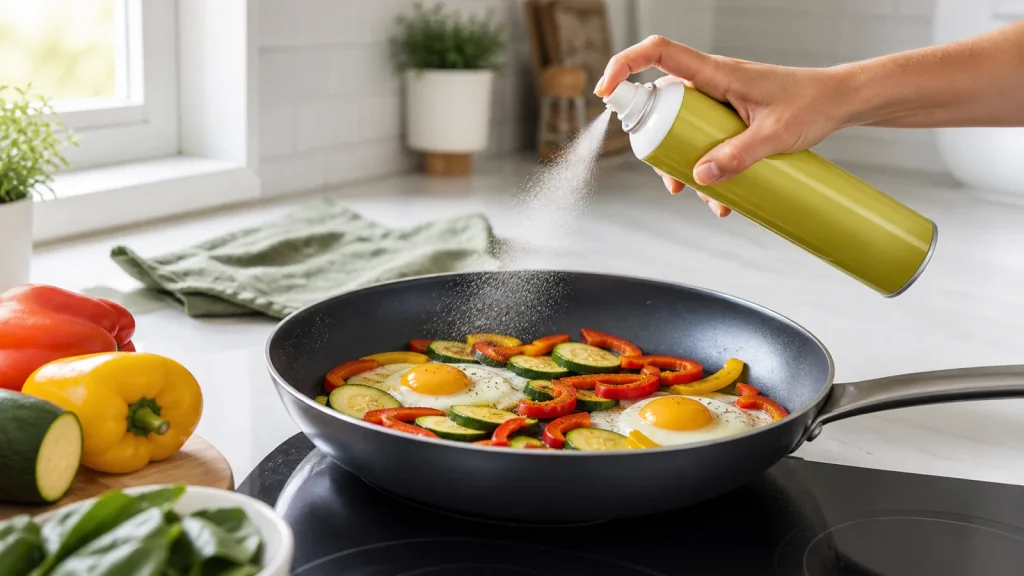
The main benefit of a cooking spray isn’t some kind of magic oil: it’s the Dosage. A fine mist covers a large area with less fat than a stream poured directly from the bottle. It’s handy, especially when you’re cooking several times a day.
Why the label may show zero
The values are calculated per serving and rounding rules vary by country. A very short spray may be too small to be displayed as zero, whilst a long press or ten sprays will dispense a measurable amount of oil. Check the portion size (in volume or weight) and the number of portions, not just the large figure on the front of the pack.
The right thing to do
- Use a cold or lukewarm frying pan and follow the manufacturer’s instructions.
- Hold the bottle at the recommended distance.
- Press once or twice briefly to create a thin film.
- Add the food and monitor the temperature.
When the spray is really useful
- Eggs and omelettes.
- Roasted or air-fried vegetables.
- Pancakes and crêpes.
- Fish or chicken on a baking tray.
- Baking tin.
The butter-flavoured spray, the Italian herb spray and the pack of two sprays are available. They help with portion control; they do not hide the amount used.
Verdict
Useful, yes, if you use it as a precision tool. A marketing ploy, too, if the word ‘zero’ tempts you to use it without restraint. The best comparison is based on the actual amount used.