
 Food supplements
 Healthy cooking
 Breakfast
 Keto products
 Healthy snacks
 Accessories & equipment
 Today's deals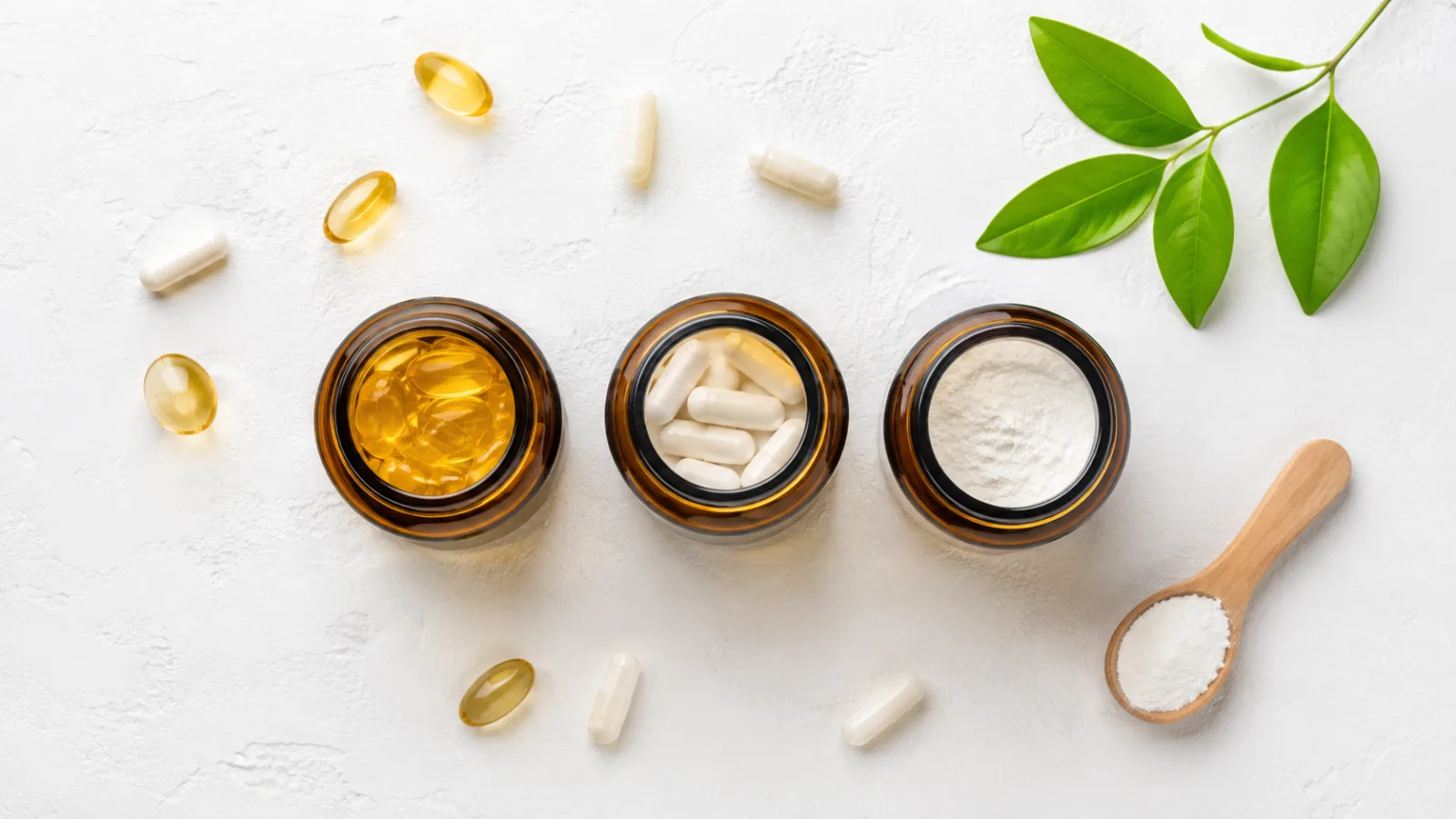
Omega-3s, vitamin D, magnesium: supplements that are worth taking
The range of supplements is vast, and there is little correlation between a product’s price and the strength of the evidence supporting it. Here is an honest ranking.
The basic principle
A supplement corrects a deficiency. If you are not deficient, the expected effect is virtually zero. This is why large-scale studies on supplementation in the general population often yield disappointing results: they mainly include people who did not need anything.
So the right question is not ‘Is this supplement effective?’ but ‘Do I need it?’.
The three most commonly cited reasons
Vitamin D
This is the most common deficiency, including in Morocco — which is surprising, given the amount of sunshine. The reasons: spending time indoors, using sun protection, wearing covering clothing, and a decline in the skin’s ability to synthesise vitamin D with age.
Vitamin D plays a role in bone health, muscle function and immunity. This is one of the few cases where a blood test is both easy and useful: ask for a test for 25-OH-vitamin D before taking supplements, rather than guessing.
Omega-3
Most people who eat little oily fish have an insufficient intake of EPA and DHA. Their effect on triglycerides is well established; their broader cardiovascular effects are more hotly debated.
Two selection criteria: the actual quantity ofEPA + DHA per capsule, not the total weight of oil, and the question of origin. A halal formula This addresses the second point — the gelatine in the capsules is often of porcine origin, which is never clearly stated.
Magnesium
Involved in more than 300 enzymatic reactions. Intake levels are frequently below the recommended amounts.
Form really does matter here. Magnesium oxide, the cheapest and most common form, has low bioavailability and a marked laxative effect. Opt for bisglycinate, citrate or malate instead.
Those that depend on context
Creatine — for those who do strength training. See our dedicated article: this is the best-researched sports supplement.
The collagen — skin and joints, with modest effects and a time frame of 8 to 12 weeks.
The digestive enzymes — Useful for certain ailments, but not a general solution.
The cranberry — Proanthocyanidins have been shown to help prevent recurrent urinary tract infections. Look at the PAC content, not the weight of the extract.
The adaptogenic mushrooms — lion’s mane, reishi, cordyceps. Promising but still in its early stages; there are few high-quality human studies. Should be regarded as a reasonable gamble, not a sure thing.
The shilajit — traditional use dating back many years, limited modern clinical data. Same comment applies.
How to read a label
The dose per intake, not per portion. A label stating a high dose ‘4’ capsules’ is not comparable to one stating the same dose for a single capsule.
Chemical form. Bisglycinate or oxide, citrate or carbonate: the difference in absorption can sometimes be a factor of three.
The NRVs (nutrient reference values). A product at 2000 % that meets the NRVs is not ten times better than one at 200 %: above a certain threshold, the excess is eliminated, and in the case of fat-soluble vitamins, it accumulates.
The number of ingredients. A complex containing thirty ingredients necessarily contains each of them in a dose too low to be effective.
What no supplement can replace
Sleep, regular physical activity and a varied diet. This may sound like a cliché, but the scale of the effects is indisputable: sleeping for six hours instead of eight impairs insulin sensitivity, recovery and appetite far more than any supplement ever could.
Supplements fill in the gaps. They do not replace the basics.
View all shop.