
Creatine monohydrate is often marketed with strongly masculine connotations, even though its mechanism of action is not gender-specific. It increases muscle stores of phosphocreatine, which are useful for rapidly regenerating ATP during short, repeated bursts of exercise.
What to expect
When combined with resistance training, creatine can improve the ability to perform repeated bursts of intense exercise and support gains in strength and lean body mass. It is not a substitute for progressive training or for adequate energy and protein intake.
Initial weight gain
A rapid increase on the scales may be due to a rise in water content within the muscles. This is not fat gain. However, for those who compete in weight-class sports, this change must be anticipated in consultation with their coaching staff.
Convenient dosage
Taking a daily dose of 3 to 5 g of creatine monohydrate is the simplest method. A loading phase speeds up saturation but is not essential and may increase digestive discomfort. The time of day is less important than consistency.
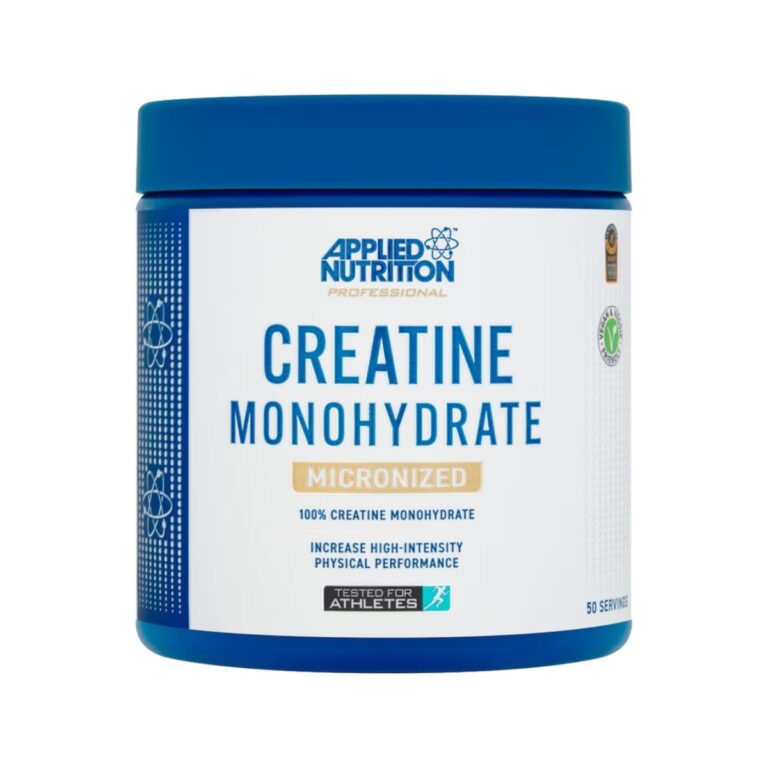
Two products are available: Applied Nutrition 50-serving Creatine Monohydrate and Dorian Yates Creatine Monohydrate 300 g.
Common misconceptions
- ‘It’s a steroid’: False. Creatine is a compound that occurs naturally in the body and in food.
- ‘It causes bloating anywhere’: The extra water is mainly found in the muscles.
- ‘You need to cycle it’: There is no general obligation to follow cycles.
- ‘Everyone should take it’: False. This is an optional tool.
Precautions
If you have kidney disease, are pregnant, breastfeeding or undergoing medical treatment, seek advice from your doctor. Choose a clearly labelled creatine monohydrate and avoid blends that conceal the dose.