The front of a bottle may state ‘1000 mgs of fish oil’ without specifying how much EPA and DHA it contains. However, it is primarily these two long-chain omega-3s that have been studied. The total weight of the oil includes other fatty acids.
The calculation in thirty seconds
- Check the serving size: one, two or three capsules.
- Find the milligrams of EPA.
- Please add the milligrams of DHA.
- Compare the total EPA + DHA per serving and the cost of that serving.
Food first
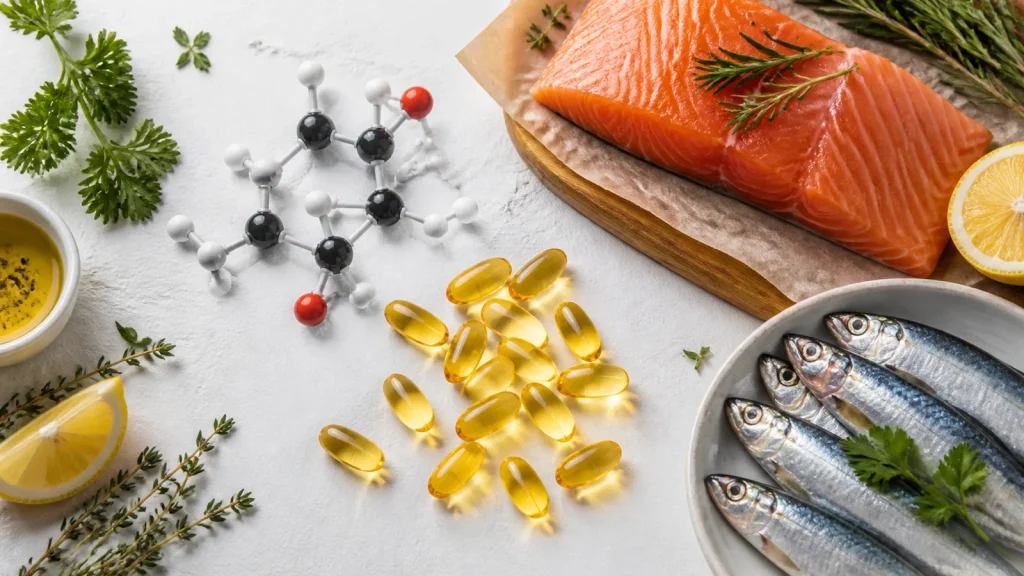
Oily fish, seafood and certain microalgae provide EPA and DHA directly. Linseeds, walnuts and rapeseed oils mainly provide ALA; the conversion of ALA into EPA and then DHA is limited. A supplement may be useful when fish consumption is low, but it is no substitute for an overall healthy diet.
What can one reasonably say?
Omega-3, EPA and DHA lower triglyceride levels at certain doses. Broader cardiovascular effects depend on the population, the dose and the clinical context. A high dose intended to treat triglycerides should be prescribed by a doctor, not taken as a self-administered supplement.
TheApplied Nutrition Omega-3 Halal1000 mg is available. Check the label on the batch you have received to find out the exact amounts of EPA and DHA per serving.
Quality and precautions
Check the use-by date, storage conditions and smell. Oil that is clearly rancid must not be consumed. If you are taking anticoagulants, have an upcoming operation, are pregnant, have a fish allergy or are taking a high dose, you should seek medical advice.