Snacking isn’t a character flaw. It’s almost always a sign that your previous meal was lacking — in protein, fibre, or simply in volume. Before looking for the right snack, it’s worth taking a look at your previous meal.
That said, long days do happen, and a well-chosen snack is better than giving in to temptation at 18 h.
The three criteria for a good snack
Proteins. This is what distinguishes a snack that keeps you full from one that makes you hungry again. Aim for at least 10 g.
Fibre. They slow down gastric emptying and prolong the feeling of fullness. The effect is noticeable from a3 g.
A sufficient quantity. For the same number of calories, a food with more volume is more filling. That’s why 30 g of almonds keep you fuller for longer than two squares of chocolate, even though the energy content is comparable.
How to read a protein bar label in ten seconds
The snack bar aisle is where the discrepancy between the packaging and the contents is greatest. Three things to bear in mind:
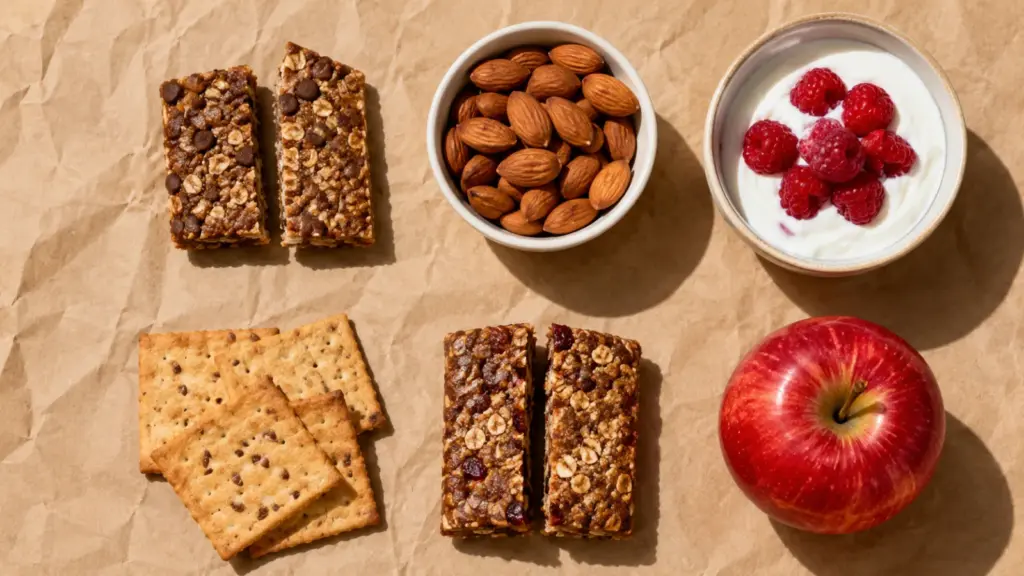
- Protein per bar. Anything under 10 g isn’t a protein bar – it’s just a cereal bar with a marketing gimmick.
- Sugars. Some ‘fitness’ bars contain more th20 gs of sugar, which is the equivalent of a standard chocolate bar.
- Polyols. They are a sugar substitute and contain almost no calories, but if you consume more than 20 to 30 g per day, they can cause bloating and have a laxative effect in many people. Two bars a day, and the afternoon becomes uncomfortable.
View the selection protein bars and protein biscuits.
Savoury alternatives
Sweet treats aren’t the only option, and it’s often a mistake to limit yourself to them: a sweet snack keeps the craving for sugar going.
The protein crisps satisfy the craving for a savoury crunch with a nutritional profile very different from that of traditional crisps. Gluten-free crackers Schär play the same role.
Snacks that cost next to nothing
It would be disingenuous to focus solely on processed foods. The best snacks are still the simplest ones:
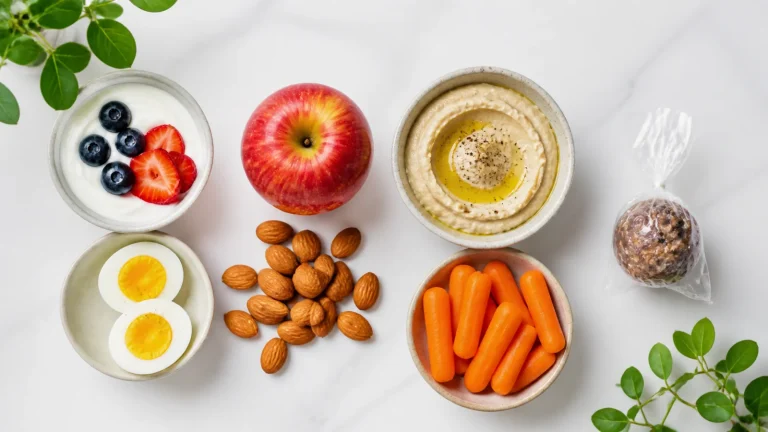
- Cottage cheese and red berries : 15 g protein, bulk and fibre.
- A handful of almonds (30 g): 6 g high in protein and high-quality fats, very filling.
- Two hard-boiled eggs : 13 g protein shakes, prepared in advance for the week.
- An apple and a square of dark chocolate : when the craving is more emotional than physical.
Commercially available products have one specific advantage: they are easy to transport and store. That is their real benefit, not any nutritional superiority.
The evening scenario
This is the hardest part. Two key factors:
A sugar-free jam on wholemeal bread Satisfies your sweet tooth whilst keeping your calorie intake very low.
Casein, a slow-digesting protein, keeps you feeling full for several hours. See our article on choosing proteins.
And here’s a question to ask yourself honestly: is it hunger, or boredom? The two aren’t dealt with in the same way.
The most common mistake
Don’t treat snacks as ‘free’ just because they’re healthy. A protein bar is 200 kcal. Two a day on top of your meals amounts to 400 kcal per day, which explains a lot of weight gain.
A snack replaces or supplements a meal. It is not an extra.
View the whole category healthy snack and thehealthy groceries.